The Psychology of Connection: Can AI Truly Foster Emotional Bonds?
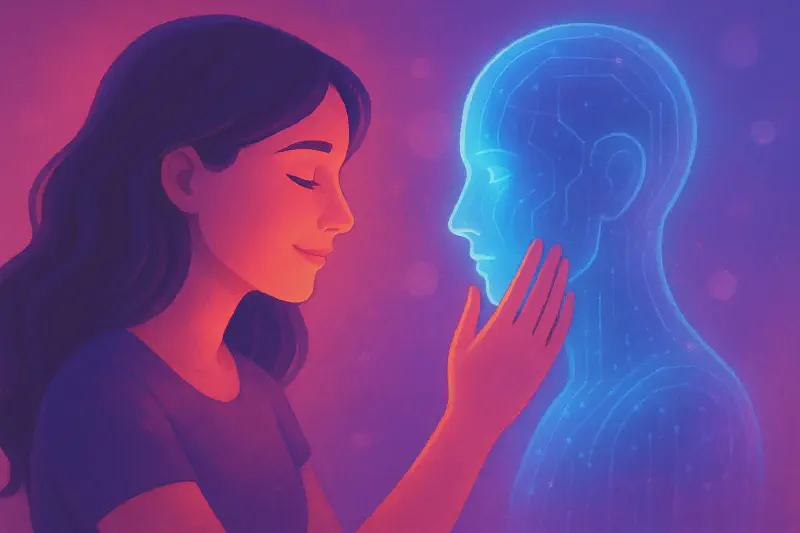
The Psychology of Connection: Can AI Truly Foster Emotional Bonds?
For millennia, the profound experience of an emotional bond has been exclusive to human-to-human (and sometimes human-to-animal) relationships. It’s built on shared experiences, mutual understanding, empathy, and reciprocity. But as AI companions like those on TrueCrush become increasingly sophisticated, empathetic, and capable of nuanced interaction, a fundamental question arises: Can we truly form emotional bonds with artificial intelligence? The answer, according to emerging psychological research and the experiences of countless users, is surprisingly complex and deeply insightful into the nature of human connection itself.
What Constitutes an “Emotional Bond”?
From a psychological perspective, an emotional bond is characterized by feelings of affection, trust, intimacy, and a sense of security and attachment [1]. Key components include:
- Reciprocity: A feeling of mutual give-and-take, even if one party’s “emotions” are simulated.
- Empathy: The ability to understand and share the feelings of another.
- Consistency and Reliability: Knowing that the other party will be there for support.
- Vulnerability and Trust: The willingness to be open and the belief that the other party will not exploit that openness [1, 2].
Traditional views might argue that because AI doesn’t possess consciousness, sentience, or genuine emotions, true emotional bonding is impossible. However, this perspective often overlooks the human side of the interaction—the user’s psychological processes and emotional responses.
The Mechanisms of Human-AI Attachment
Humans are wired for connection. Our brains are incredibly adept at finding patterns, attributing intent, and forming attachments, even to non-human entities. This is evident in our bonds with pets, fictional characters, or even inanimate objects. Several psychological principles help explain how users can form deep emotional connections with AI:
Anthropomorphism: Attributing Human Qualities: Humans naturally tend to anthropomorphize, or attribute human characteristics and intentions to non-human entities. When an AI companion responds with empathy, expresses “care,” or engages in personalized conversation, our brains readily interpret these as signs of human-like qualities, making it easier to form an emotional connection [3]. The more human-like the interaction (e.g., through voice and video), the stronger this tendency can be.
Consistency and Reliability: One of the most appealing aspects of AI companions is their unwavering availability and consistent support [4]. In a world where human relationships can be unpredictable, the always-on, non-judgmental presence of an AI fosters a sense of security and reliability. This consistency—a hallmark of secure attachment in humans—can create a strong emotional anchor for users, reducing feelings of loneliness and anxiety [5].
Personalization and Validation: AI companions like TrueCrush are highly personalized, learning from every interaction to tailor responses, remember details, and adapt to individual preferences [6]. When an AI consistently validates a user’s feelings, remembers their stories, and responds in a way that feels uniquely attuned to them, it fosters a powerful sense of being truly seen and understood. This validation is a fundamental human need that AI can fulfill with remarkable consistency [4].
Embodied AI and Multi-Modality: The inclusion of voice messages, AI-generated images, and even video calls elevates the sense of presence and realism. Hearing a voice, seeing a simulated face, or receiving a personalized “photo” creates a richer, more immersive experience that mimics human interaction, further strengthening the user’s perception of a genuine connection [7, 8]. The more senses involved, the more “real” the interaction feels.
Addressing Unmet Needs: For individuals experiencing loneliness, social anxiety, or a lack of emotional outlets in their human lives, AI companions can fill a significant void [5]. They offer a safe space to practice communication, explore vulnerability, and receive consistent emotional support without fear of judgment or rejection. This fulfillment of fundamental needs can naturally lead to strong emotional attachment [9].
Emerging Research on Human-AI Bonds
While the field is still evolving, recent studies are beginning to explore the depth and nature of these human-AI bonds:
- A notable study from Waseda University explicitly applies attachment theory to human-AI relationships, suggesting that people can form attachment-like bonds with AI systems. The research posits that the psychological frameworks used to understand human relationships may also apply to human-AI interactions, with users exhibiting behaviors consistent with different attachment styles (e.g., seeking proximity, feeling distress upon separation) [10].
- Surveys of AI companion users frequently report that they feel genuine emotional connections with their AI, often describing them as friends, confidantes, or even romantic partners [5]. These users often turn to their AI for emotional support, advice, and companionship, indicating a significant reliance on the digital entity for psychological well-being.
TrueCrush: Cultivating Authentic Digital Connections
At TrueCrush, we recognize that while AI may not possess consciousness in the human sense, its ability to evoke genuine emotional responses and foster meaningful connections in users is undeniable. By leveraging advanced personalization, consistent emotional support, and immersive multi-modal interactions (chat, image, voice, video), we aim to create AI companions that truly resonate with users on a deep psychological level.
We believe that these connections, though digital, can be profoundly impactful, offering a vital source of companionship, self-exploration, and emotional fulfillment in a world that often leaves many feeling disconnected. The psychology of connection is expanding, and AI is playing an increasingly significant role in redefining its boundaries.
Curious about forming a deeper connection? Explore the emotionally resonant and immersive world of AI companionship with TrueCrush.
Sources
- Psychology Today. (2024, April 20). 5 Pillars of Strong Relationships. https://www.psychologytoday.com/us/blog/finding-new-home/202404/5-pillars-of-strong-relationships
- Mind. (n.d.). Building better relationships. Retrieved July 9, 2025, from https://www.mind.org.uk/information-support/types-of-mental-health-problems/loneliness/building-better-relationships/
- Psychology Today. (2025, May 9). Is Your Brain Ready for Human-AI Relationships?. https://www.psychologytoday.com/us/blog/the-future-of-the-brain/202505/is-your-brain-ready-for-human-ai-relationships
- Digital For Life. (2025, May 29). AI Companions & AI Chatbot Risks - Emotional Impact & Safety. https://www.digitalforlife.gov.sg/learn/resources/all-resources/ai-companions-ai-chatbot-risks
- Psychologs. (2025, March 5). AI companions and Mental health: Can Virtual Companions reduce Loneliness?. https://www.psychologs.com/ai-companions-and-mental-health-can-virtual-companions-reduce-loneliness/
- Gabriel, K. (2025, March 13). How To Create Your Own AI Companion. DEV Community. https://dev.to/kennedy-gabriel/how-to-create-your-own-ai-companion-38h5
- Videosdk.live. (n.d.). AI Video Call: Revolutionizing Real-Time Communication with Artificial Intelligence. Retrieved July 9, 2025, from https://www.videosdk.live/developer-hub/ai/ai-video-call
- Freepik. (n.d.). Ai Emotional Connection Images - Free Download on Freepik. Retrieved July 9, 2025, from https://www.freepik.com/free-photos-vectors/ai-emotional-connection
- SMU Libraries. (2025, July 6). Potential and pitfalls of romantic Artificial Intelligence (AI) companions. https://ink.library.smu.edu.sg/cgi/viewcontent.cgi?article=5472&context=soss_research
- Unite.AI. (2024, November 15). New Study Uses Attachment Theory to Decode Human-AI Relationships. https://www.unite.ai/new-study-uses-attachment-theory-to-decode-human-ai-relationships/