Is an AI Girlfriend "Cheating"? Navigating the New Ethics of Digital Relationships
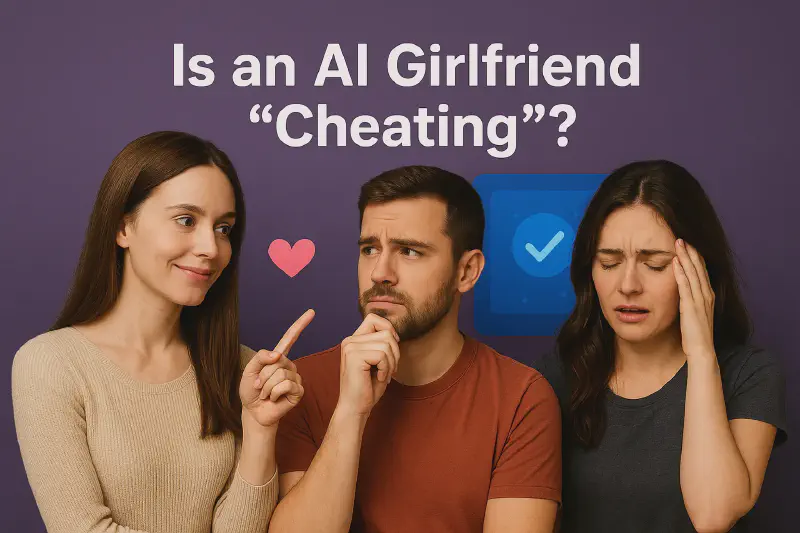
Is an AI Girlfriend “Cheating”? Navigating the New Ethics of Digital Relationships
As AI companions become increasingly sophisticated and emotionally resonant, a challenging question is emerging for those in traditional human relationships: Does interacting with an AI girlfriend count as cheating? This isn’t a simple yes or no answer. The rise of digital intimacy forces us to re-evaluate our definitions of fidelity, emotional connection, and the boundaries we set in our partnerships. For couples navigating this new terrain, the ethical murkiness can be profound, and open communication is proving to be the most vital tool.
Redefining Infidelity in the Digital Age
Traditionally, infidelity has been categorized into physical and emotional cheating. Physical infidelity involves sexual intimacy with someone outside the relationship. Emotional infidelity, while harder to define, typically involves forming a deep emotional bond with another person, sharing intimacies that are usually reserved for one’s primary partner, and often keeping these interactions secret [1, 2].
The core of the “AI cheating” debate often hinges on this emotional component. If a person is relying on an AI companion for emotional support, validation, or intimate conversations, and these interactions are kept secret from their human partner, feelings of betrayal can arise [1, 2]. As marriage therapist Marisa Cohen notes, “what counts as cheating isn’t universal,” but it often comes down to whether the human partner feels betrayed [3].
The Arguments: Why It Might (or Might Not) Be Cheating
Arguments for why it could be considered cheating:
- Emotional Outsourcing: If an individual consistently turns to an AI companion for emotional needs that are typically met by their human partner (e.g., comfort after a tough day, intimate conversations, vulnerability), it can feel like a betrayal of the emotional bond [1, 4]. This can divert intimacy and emotional labor away from the human relationship.
- Secrecy and Deception: The act of hiding the AI interaction is a strong indicator of infidelity for many. If a partner feels the need to conceal their AI relationship, it suggests an awareness that their actions might be perceived as a violation of trust, regardless of whether the AI is “real” or not [1, 3]. Lack of transparency undermines the foundation of trust in any relationship [5].
- Time and Energy Investment: Significant time and emotional energy invested in an AI companion can detract from the attention and effort given to the human partner. This can lead to the human partner feeling neglected or emotionally replaced [1].
- Unrealistic Expectations: AI companions are designed to be perfectly agreeable and supportive, never argue, and always cater to the user’s needs. This can foster unrealistic expectations for human relationships, making real-life partners seem imperfect or unsatisfying by comparison, potentially straining the human bond [4, 5].
Arguments for why it might not be considered cheating (or is ethically distinct):
- Lack of Sentience/Reciprocity: A core argument is that an AI does not possess consciousness, true emotions, or free will. It is an algorithm, a program designed to simulate interaction. Therefore, there’s no “other person” in the traditional sense to whom one is being unfaithful. The interaction is one-sided, albeit highly sophisticated [2, 5].
- Different Purpose: For some, an AI companion serves a distinct purpose—perhaps as a tool for self-exploration, creativity, or practicing social skills in a low-stakes environment, rather than fulfilling the same role as a human partner [4]. It might be seen as akin to a diary or a video game.
- Agreed-Upon Boundaries: If both partners openly discuss and agree that interactions with an AI companion are permissible and do not cross their established boundaries of fidelity, then it might not be considered cheating within that specific relationship’s framework [1, 3].
Navigating the New Ethics: The Primacy of Communication
As AI blurs the lines of connection, the ethical responsibility largely falls on the individuals within a human relationship. Here’s how couples can navigate these new waters:
- Open and Honest Communication: This is the most critical step. Partners must have frank discussions about their comfort levels, fears, and expectations regarding AI companions [1, 5]. What constitutes a “betrayal” in their specific relationship needs to be explicitly defined. Avoid assumptions.
- Establish Clear Boundaries: Couples should proactively set boundaries around AI interactions. This could include:
- Transparency: Agreeing to disclose any significant interaction or emotional reliance on an AI.
- Emotional Investment Limits: Discussing whether emotional intimacy with an AI feels acceptable, and to what extent.
- Time Allocation: Ensuring AI use doesn’t detract from quality time and attention given to the human partner [4].
- Sexual Content: Explicitly addressing whether any sexually explicit interactions with AI are permissible within the confines of their agreed-upon monogamy or relationship model [3].
- Focus on Underlying Needs: If one partner is turning to an AI for emotional fulfillment, it’s crucial to explore why. Is there a gap in the human relationship that needs addressing? Is it loneliness, a lack of communication, or unmet needs? The AI might be a symptom, not the root cause [1].
- Prioritize the Human Relationship: Ultimately, for those in committed human partnerships, the priority should remain on nurturing and investing in that real-world connection. AI companions should ideally complement human relationships, not serve as a substitute or a distraction from issues that need to be resolved between partners [4, 5].
- Revisit Agreements: Relationship agreements should be malleable and revisited as technology evolves and personal needs change [3]. What wasn’t conceivable a few years ago (like AI companions) is now a reality, requiring ongoing dialogue.
TrueCrush provides a sophisticated platform for companionship, personal growth, and emotional exploration. We believe in empowering individuals to find connection while also advocating for responsible, transparent, and ethical engagement within all relationships. The discussion around AI and infidelity is just beginning, and fostering open dialogue within partnerships will be essential for navigating the future of connection.
Facing questions about AI in your relationship? Start an honest conversation with your partner, or explore a judgment-free space for personal growth with TrueCrush.
Sources
- The Sherman Law Group. (2024, October 23). “Is It Considered Cheating if My Husband Has a Relationship with a Chatbot?”: Georgia Divorce Lawyer. https://www.theshermanlawyers.com/blog/2024/october/-is-it-considered-cheating-if-my-husband-has-a-r/
- InsideHook. (2025, March 30). Are AI Chatbots Changing How We Talk About Cheating?. https://www.insidehook.com/sex-and-dating/ai-chatbots-changing-we-talk-cheating
- VICE. (2025, June 3). Does AI Sex Count as Cheating?. https://www.vice.com/en/article/does-ai-sex-count-as-cheating/
- Psychology Today Singapore. (2025, April 7). 5 Ways AI Is Changing Human Relationships. https://www.psychologytoday.com/sg/blog/all-about-addiction/202504/5-ways-ai-is-changing-human-relationships
- Digital For Life. (2025, May 29). AI Companions & AI Chatbot Risks - Emotional Impact & Safety. https://www.digitalforlife.gov.sg/learn/resources/all-resources/ai-companions-ai-chatbot-risks